
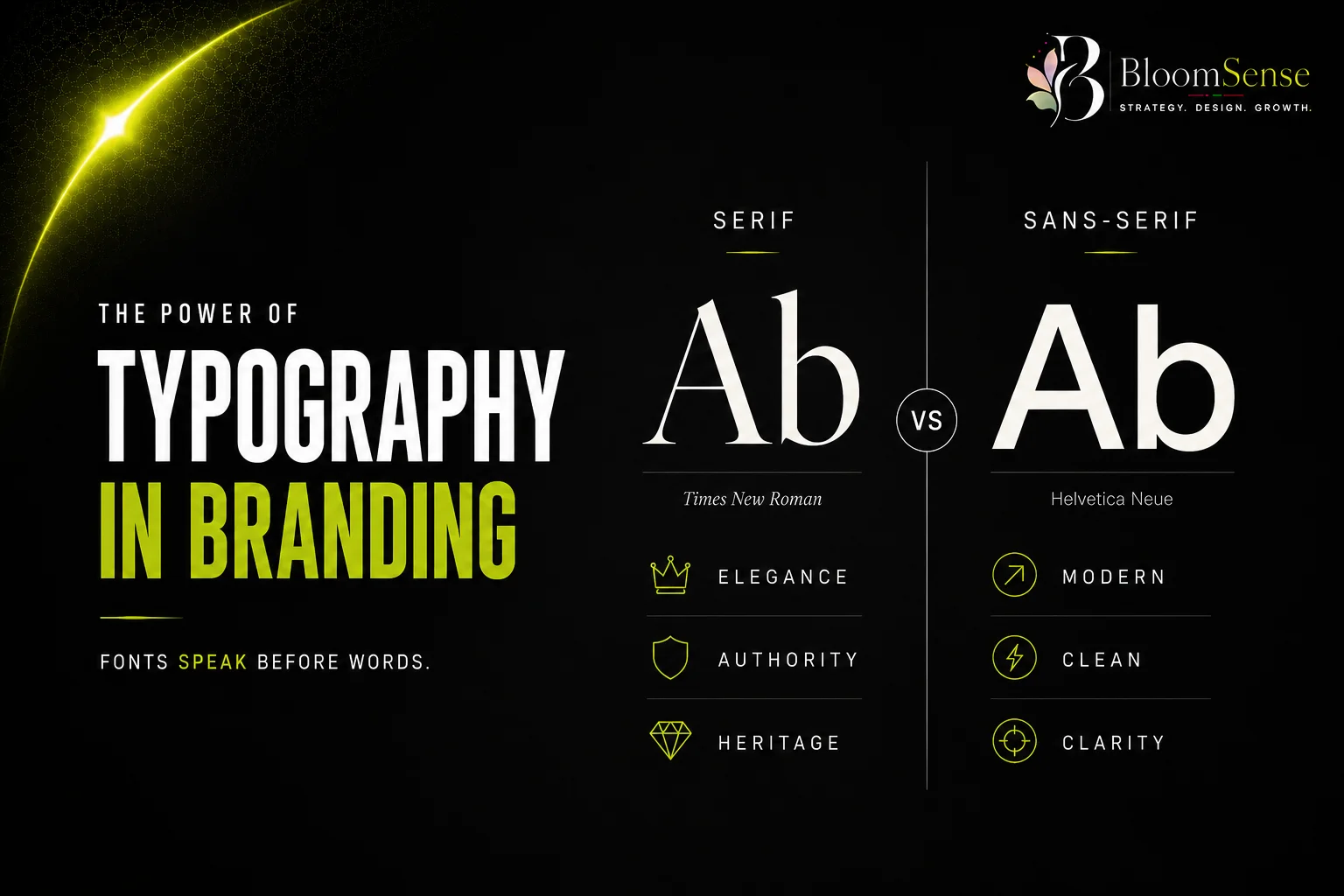
Typography is one of the most underestimated tools in brand identity. Most business owners think of fonts as a minor aesthetic detail. In reality, your typeface communicates personality, era, tone, and category — before anyone reads a single word.
What Different Type Styles Communicate
Serif Typefaces
Serifs (typefaces with small strokes at the ends of letterforms — think Times New Roman, Garamond) communicate tradition, authority, and trust. Used heavily in finance, law, publishing, and luxury.
Sans-Serif Typefaces
Clean, modern, democratic. Sans-serifs (no strokes — think Helvetica, Inter, Futura) signal clarity and modernity. The dominant choice in tech, startups, and digital-first brands.
Display / Experimental Typefaces
High personality, high risk. Display typefaces make strong statements — use them for headlines and brand moments only. They age faster and require careful application.
Building a Brand Typography System
A professional brand type system typically includes two typefaces at most — one for display (headlines, impact moments) and one for body (readability, long-form). Using more than two creates visual noise and inconsistency.
Type is voice made visible. Before your audience reads the words, the typeface has already told them how to feel about them.
Typography Best Practices for Brand Identity
- ▪Limit yourself to two typefaces maximum
- ▪Ensure your body typeface is highly legible at small sizes
- ▪Define a clear type hierarchy (display, heading, subheading, body, caption)
- ▪Test all type choices across digital and print
- ▪Ensure licensed fonts — free ≠ commercially licensed
Common Typography Mistakes in Branding
- ▪Choosing decorative fonts that sacrifice legibility
- ▪Using default system fonts and assuming no one notices
- ▪Inconsistent use of weights and sizes across touchpoints
- ▪Not accounting for how fonts render on screen vs print
Strategic branding, design, and growth company based in Noida, India. We build category-defining brands through purpose, perception, and intelligent creativity.