The D2C revolution in India — led by brands like boAt, Mamaearth, Sugar Cosmetics, and Licious — has proven one thing: distribution is no longer the moat it once was. In a world where anyone can sell directly to customers, brand is the last durable competitive advantage.
What Makes D2C Brand Building Different
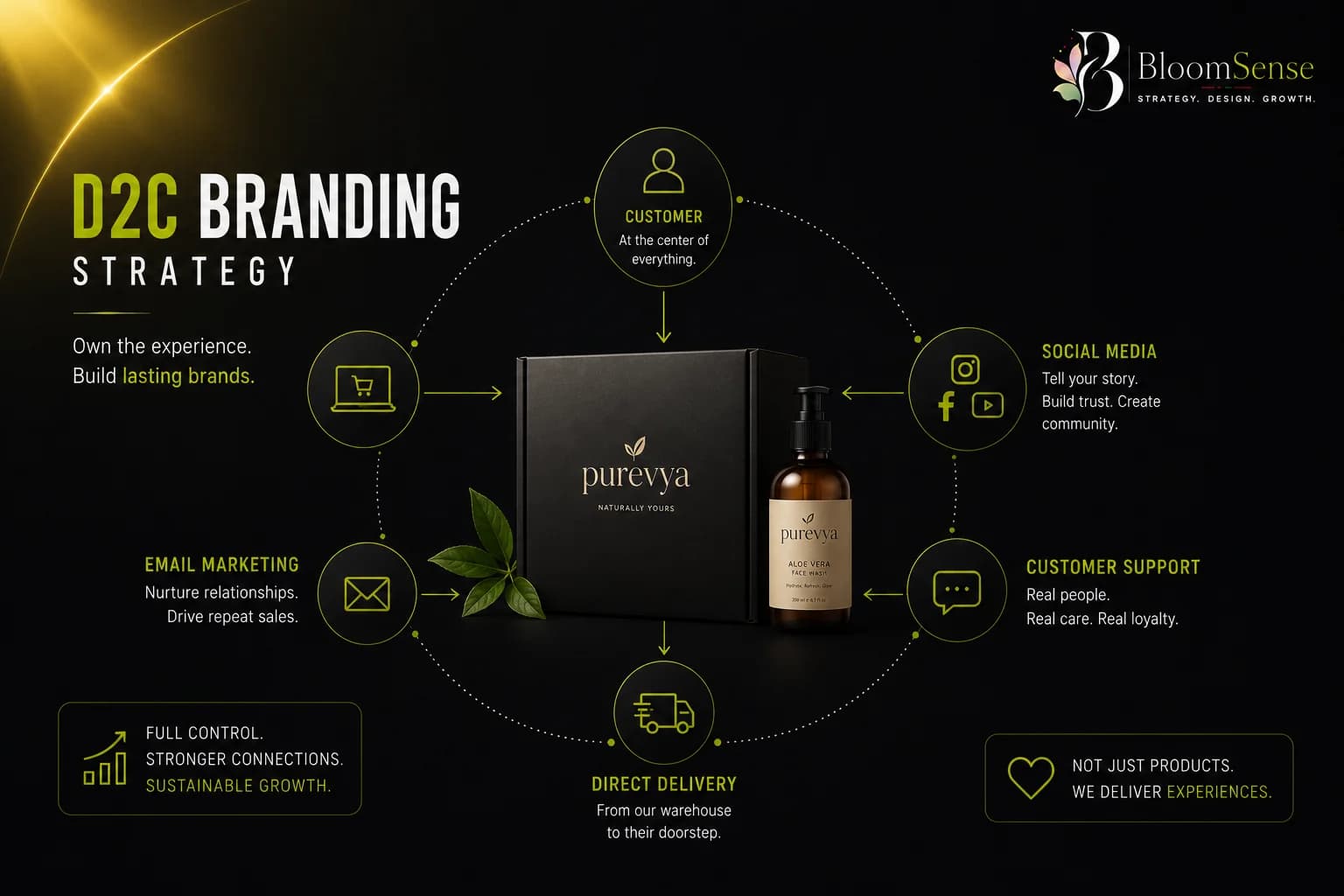
Traditional brands built distribution relationships with retailers who controlled customer access. D2C brands own the customer relationship directly — which means they own the data, the experience, and the story. This is a profound advantage — if you know how to use it.
The D2C Brand Building Playbook
1. Lead with a Strong Point of View
The best D2C brands don't just sell products — they represent a perspective. Mamaearth leads with toxin-free. boAt leads with bold, youth culture. Your point of view is your brand's magnet — it attracts the right audience and repels the wrong one.
2. Make Packaging a Brand Touchpoint
In D2C, the unboxing experience is your first physical brand moment. Brands like Sugar and Plum have turned packaging into a social media phenomenon — customers post unboxing videos without being asked. Design packaging like it's a gift.
3. Build Community, Not Just Customers
The D2C brands with the lowest CAC and highest LTV are the ones that have built communities — WhatsApp groups, Discord servers, Instagram communities — where customers connect with each other and with the brand.
A customer who buys once is a transaction. A customer who belongs to your community is an asset — and often, your best marketer.
D2C Brand Strategy: What to Prioritise
- ▪Invest in brand before you invest in performance marketing
- ▪Build a customer feedback loop into your brand process
- ▪Use customer data to personalise — but lead with brand, not personalisation
- ▪Create a retention programme that rewards loyalty with brand moments, not just discounts
- ▪Treat customer service as a brand expression, not a cost centre
D2C Branding Mistakes to Avoid
- ▪Over-relying on performance ads before building organic brand equity
- ▪Using discounts as the primary retention mechanism (trains customers to wait for sales)
- ▪Copying the aesthetic of successful D2C brands instead of developing your own
- ▪Neglecting the post-purchase experience after the sale is made
Strategic branding, design, and growth company based in Noida, India. We build category-defining brands through purpose, perception, and intelligent creativity.