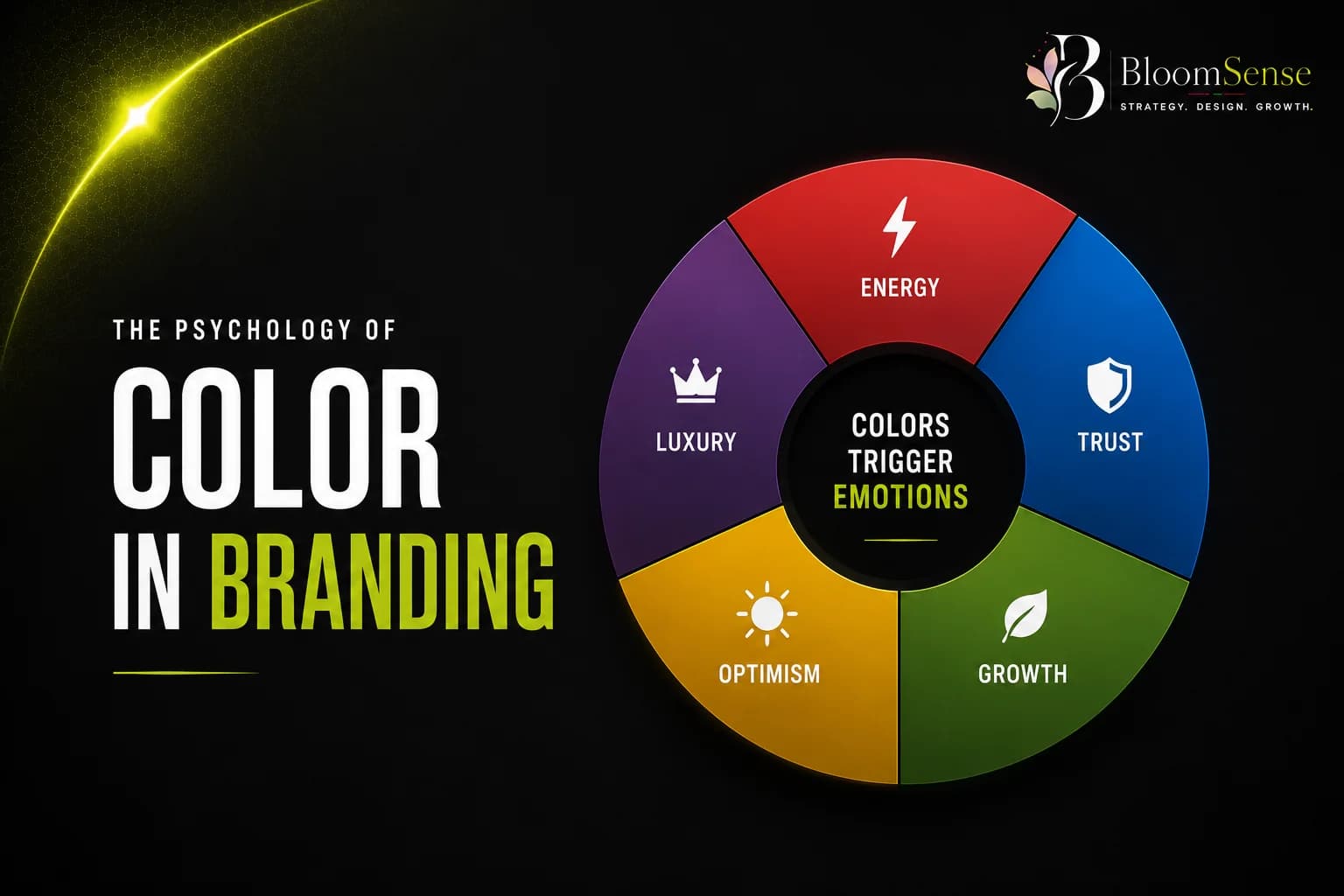
Studies show that colour increases brand recognition by up to 80%. It influences 85% of purchase decisions. And people form a colour-based impression of a brand within 90 seconds. Colour is not decoration — it's a strategic tool.
What Different Colours Communicate
Red
Energy, urgency, passion, excitement. Red accelerates the heart rate and creates a sense of urgency. Used by brands that want to convey boldness, appetite, or action.
Blue
Trust, stability, expertise, calm. The most commonly used colour in corporate branding — particularly finance, technology, and healthcare — because it signals reliability and intelligence.
Green
Growth, nature, health, prosperity. Naturally associated with sustainability and wellness, but also money and financial growth.
Yellow / Lime
Optimism, energy, creativity, disruption. Used by brands that want to stand out and signal positivity or innovation. Electric lime, in particular, signals boldness and modernity.
Black
Luxury, sophistication, authority, power. Dominant in premium, luxury, and editorial brands. Creates high contrast and a sense of exclusivity.
White
Simplicity, cleanliness, minimalism, space. Often used as a primary background in premium and tech brands to create breathing room and signal clarity.
The most effective brand palettes are built on contrast and intention — not on what the founder happens to like.
How to Choose Brand Colours Strategically
- 1.Define your brand personality first — colours should express it
- 2.Map your competitors' colours — differentiation matters
- 3.Consider your industry conventions — then decide whether to conform or contrast
- 4.Test combinations for accessibility (contrast ratios for text legibility)
- 5.Define primary, secondary, and neutral roles for each colour
Common Colour Branding Mistakes
- ▪Choosing colours based on personal preference, not brand strategy
- ▪Using too many colours without a clear hierarchy
- ▪Ignoring how colours render across digital and print
- ▪Not defining precise colour values (HEX, RGB, CMYK, Pantone)
Strategic branding, design, and growth company based in Noida, India. We build category-defining brands through purpose, perception, and intelligent creativity.