
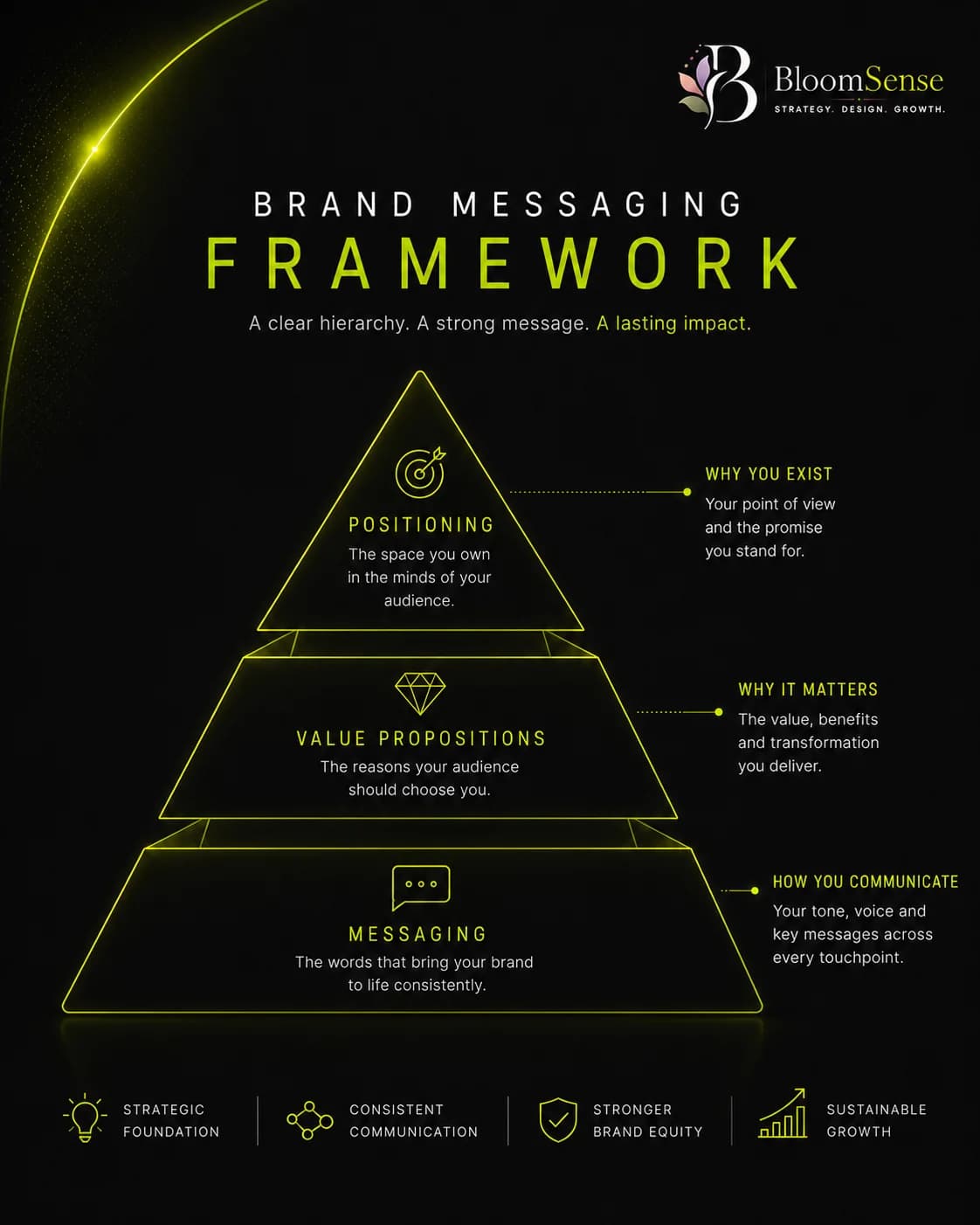
Without a messaging framework, every piece of content your brand produces is a roll of the dice. With one, your entire team — from marketing to sales to customer support — communicates with the same voice, the same clarity, and toward the same goal.
What Is a Brand Messaging Framework?
A brand messaging framework is a structured document that defines the key messages your brand communicates, in what order, to which audiences, and in what tone. It's the single source of truth for all brand communication.
The Core Components
1. Brand Positioning Statement
The internal compass: "For [target audience], [brand] is the [category] that [primary benefit] because [reason to believe]." This never appears verbatim in public — it's the strategic foundation everything else rests on.
2. Core Value Propositions
The three to five primary reasons your audience should choose you — each supported by proof points and specific evidence.
3. Tagline or Brand Line
A single, memorable expression of your brand's positioning. The best taglines are short, distinct, and own-able — not generic claims anyone could make.
4. Brand Voice and Tone
Voice is consistent (who you are). Tone adapts by context (formal in a contract, warm in a welcome email). Define both with examples of do/don't.
5. Audience-Specific Messaging
Different audiences care about different things. Your enterprise buyer wants ROI and risk reduction. Your SME owner wants simplicity and speed. Same brand — adjusted emphasis.
A messaging framework is not a creative brief. It's a strategic document. It informs creative — it doesn't replace it.
How to Build Yours: Step by Step
- 1.Lock your brand positioning first
- 2.Identify your two or three core audience segments
- 3.List the top 3 things each audience cares about
- 4.Write value propositions that bridge your offer to their needs
- 5.Define voice with 4–5 adjectives and real examples
- 6.Compile, review with leadership, and distribute as a living document
Signs Your Messaging Framework Needs Work
- ▪Different team members describe your brand differently
- ▪Your website copy sounds nothing like your sales pitch
- ▪Customers struggle to explain what you do after meeting you
- ▪You're constantly rewriting the same content from scratch
Strategic branding, design, and growth company based in Noida, India. We build category-defining brands through purpose, perception, and intelligent creativity.