
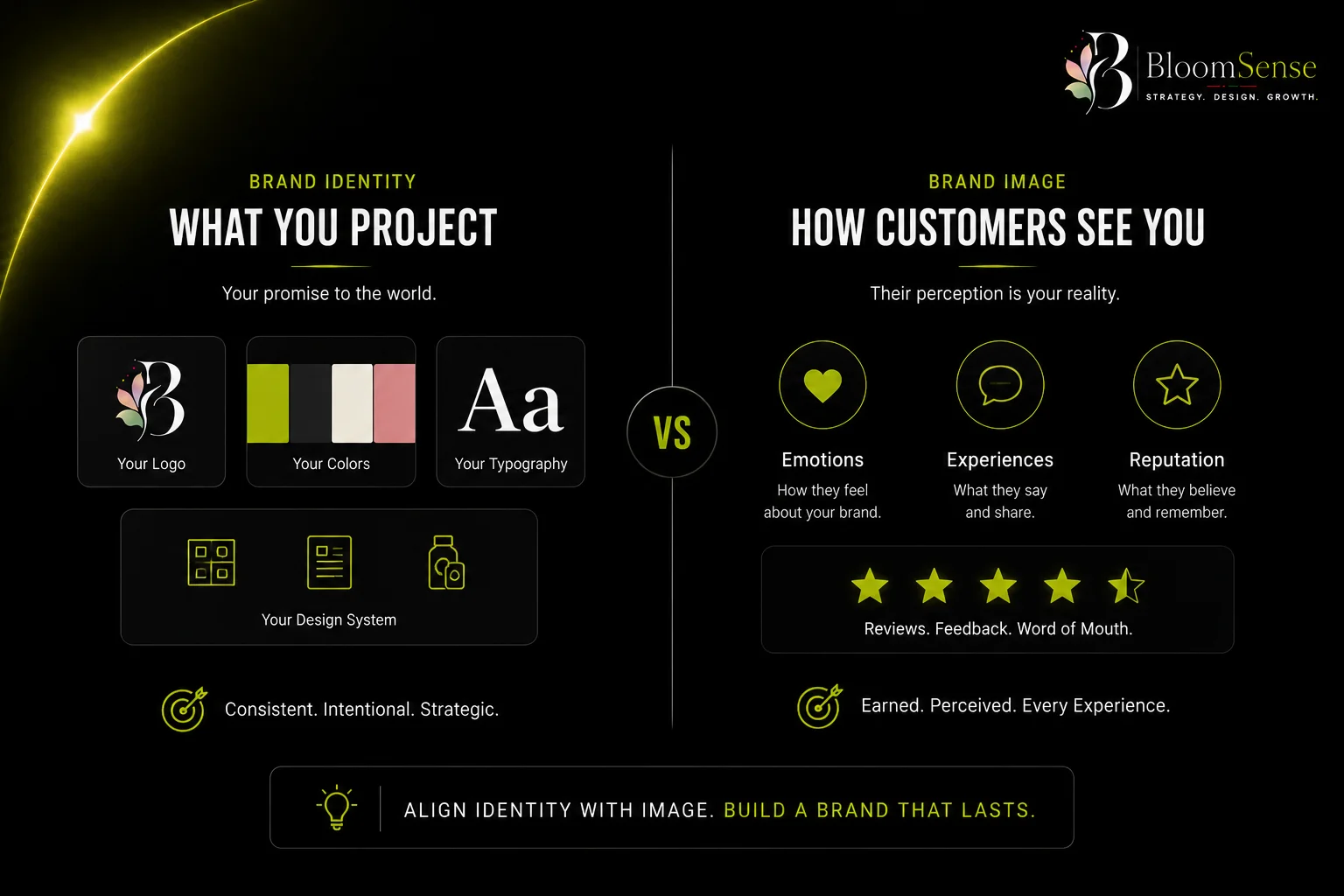
Every brand has two realities: the one it intends to project, and the one that customers actually experience. The distance between these two is where brand strategy lives.
Brand Identity: What You Project
Brand identity is the deliberate, managed set of signals your brand sends: your logo, colours, typography, messaging, tone of voice, values, and positioning. It's everything you control and intentionally communicate to the world.
Brand Image: What Customers Perceive
Brand image is the aggregate impression that exists in the minds of your audience — formed by every interaction they have with your brand, including those you don't control: reviews, word of mouth, press coverage, and others' experiences.
Your brand is not what you say it is. It's what they say it is. The job of brand management is to make those two things as close as possible.
Why the Gap Exists
- ▪Inconsistent brand application across touchpoints
- ▪Customer experience doesn't match brand promise
- ▪Messaging claims that reality doesn't support
- ▪Third-party associations (reviews, press, partners) outside your control
- ▪Historical brand impressions that haven't been updated by new communications
How to Measure Your Brand Image
- ▪Customer surveys — direct questions about brand perception
- ▪NPS (Net Promoter Score) — loyalty and advocacy proxy
- ▪Social listening — unfiltered customer language about your brand
- ▪Review analysis — patterns in what customers praise and criticise
- ▪Sales team feedback — objections and buying signals from real conversations
How to Close the Gap
- 1.Conduct a brand audit to honestly assess the current image
- 2.Identify the specific gaps and their root causes
- 3.Address experience issues first — communication can't fix a broken product
- 4.Adjust messaging to match reality, not aspiration
- 5.Communicate changes consistently and persistently over time
Strategic branding, design, and growth company based in Noida, India. We build category-defining brands through purpose, perception, and intelligent creativity.